The cable audit: one block, one cable per standard
Sixteen charging items went onto the scale, and six went back in the pouch. The rule that got them there was one cable per connector standard.
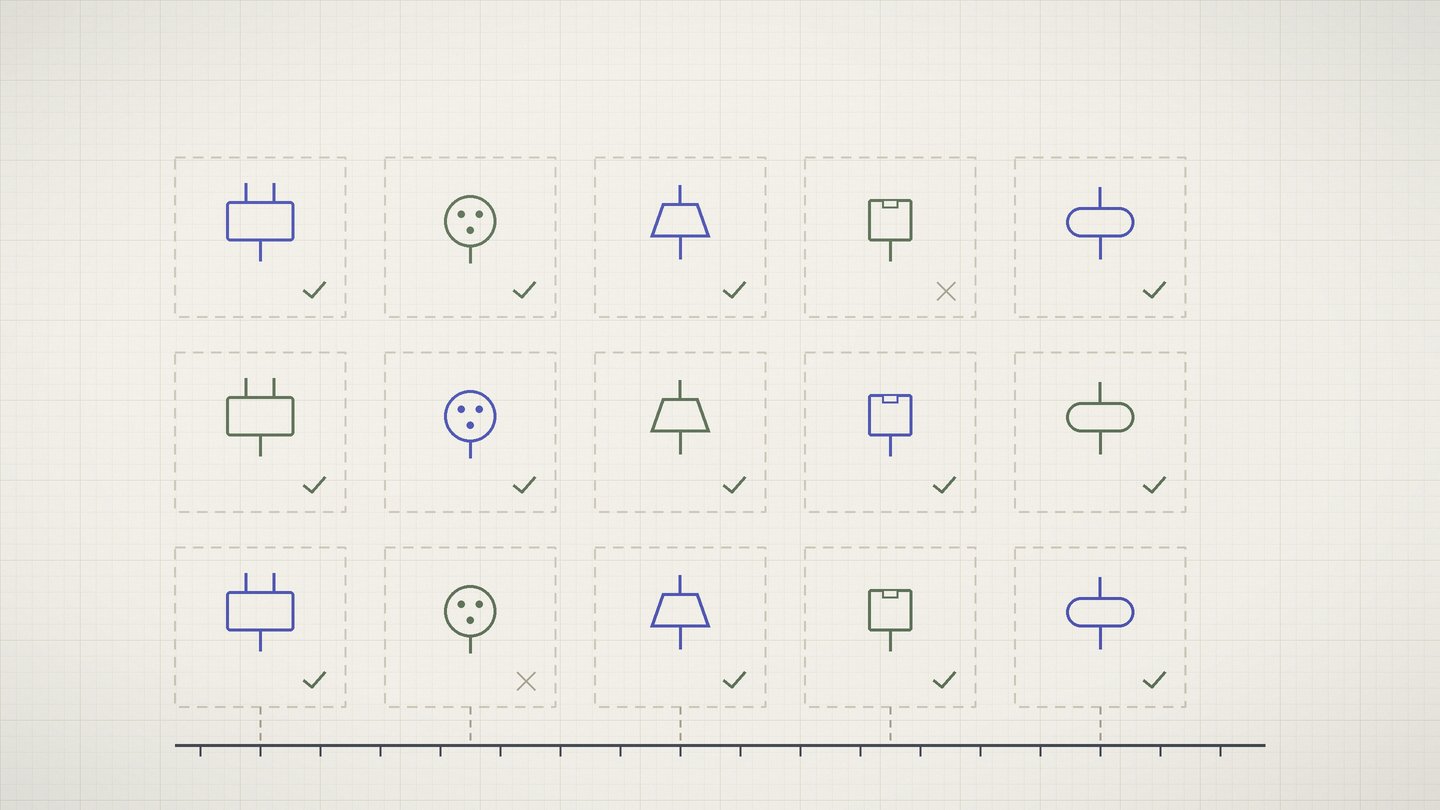
My charging pouch had become an archive of every device I have ever owned. Cables went in whenever a new gadget arrived, and no cable ever came back out. In late February I weighed the whole pouch on the kitchen scale and read 611 grams, which is more than my rain shell. I decided the pouch had to explain itself item by item, or shrink.
The hypothesis was simple to state and uncomfortable to test. Most of the kit was duplication, and a full inventory plus two rules would replace all of it. Rule one: a single wall block with three ports handles every overnight charge. Rule two: I carry exactly one cable per connector standard, no matter how many devices share that standard.
I ran the audit at the bench over two evenings in early March. Then I packed the surviving kit for nine days on the road, across three lodgings and one early morning at a small airport, and I logged every moment the rules helped or failed.
The method
An audit only works if nothing hides, so step one was a full dump. Every cable, block, adapter, and cradle in the house that travels with me went onto the bench. I taped a sheet of graph paper to the wall and listed each device I pack, along with the port it charges through. The list came out shorter than I expected:
- Phone: the small reversible oval plug that most current gear now shares
- E-reader: the same oval plug
- Wireless earbuds case: the same oval plug again
- Headlamp: the older micro plug
- Camera: an oval port on the body, plus a separate cradle at home for spare batteries
- Watch: a proprietary magnetic puck with its own fixed cable
- Battery bank: oval in, oval out
Seven devices, three standards, one outlier. Next I weighed every item on a kitchen scale that resolves to one gram and wrote each number beside its line. The two rules did the rest of the work. One block with three ports replaced three single port blocks and a car adapter. One 100 centimeter oval cable, one 50 centimeter micro cable, and the watch puck covered all three standards. Any item that wanted an exception had to argue its case in one written sentence, and most had no sentence to offer.
I allowed myself a single contingency. A second oval cable, 30 centimeters long, went into a paper envelope that I signed and dated. Opening that envelope on the road would count as a rule failure, logged with the reason.
Field notes from nine days
The first two lodgings made the case for the single block faster than I could. Both rooms offered exactly one reachable outlet, and each time it sat behind a nightstand. One block claimed that outlet once, and three devices drank from it overnight. The old system would have sent me crawling behind furniture three separate times, which I have done before and do not miss.
Night two broke the single oval cable rule, and I want to be precise about how. The phone, the battery bank, and the earbuds all sat below 30 percent at 10 pm. The block had three ports open, but I owned one oval cable, so the devices had to queue. I set an alarm for 1 am to rotate the cable, which is a silly way to defend a rule. At 6 am I opened the envelope and put the 30 centimeter spare into service. It stayed in service for the rest of the trip and never went back in the envelope.
The small airport morning handed the short cable a second job. Charging pillars in waiting areas put their outlets at knee height, and a 100 centimeter cable leaves a phone dangling in the air. The 30 centimeter spare held the phone flat on the pillar shelf with no slack to snag. The micro cable worked exactly once all trip, when the headlamp came home from a dawn walk at 12 percent. Once was enough, because the headlamp has no substitute after dark.
What broke
Three things failed on this trial, and each failure taught me something specific.
The watch puck resisted the whole system. It is proprietary, it serves exactly one device, and its fixed cable tangles around everything else in the pouch. At 47 grams it weighs more than the micro cable and the spare combined. I cannot cut it without leaving the watch at home, so it rides along as a permanent tax on the kit.
The camera assumption half failed. The body port fills a battery in about 210 minutes, while the cradle at home does the same work in about 95. On this trip I shot casually, and the slow charge never cost me a frame. On a photography trip with two or three batteries cycling every night, the cradle would go straight back into the kit, and its 39 grams would be a fair price.
Cable length failed once. In the third lodging the only outlet sat behind a desk, and 100 centimeters left the phone hanging by its plug. I stacked two paperbacks on a chair to build a shelf, which worked and looked ridiculous. A 150 centimeter cable would erase that failure for about 15 extra grams, and I am still deciding whether that trade is the first step back toward the old pouch.
The numbers
Here is the full accounting, weighed on the same scale before and after the audit.
The kit before the audit held 16 items at 611 grams in total:
- Nine cables of mixed standards and lengths: 245 grams
- Three single port wall blocks: 170 grams
- One car adapter: 36 grams
- The watch puck: 47 grams
- The camera battery cradle: 39 grams
- The old zip pouch itself: 74 grams
The kit after the audit holds 6 items at 274 grams:
- One wall block with three ports: 104 grams
- One 100 centimeter oval cable: 41 grams
- One 30 centimeter oval spare: 19 grams
- One 50 centimeter micro cable: 22 grams
- The watch puck, unreformed: 47 grams
- A smaller sleeve: 41 grams
That comes to 337 grams and 10 items removed, and nothing I cut was missed even once in nine days. The count matters more to me than the grams do. Six items fit inside one glance, so the morning sweep of a hotel room takes seconds, and nothing gets forgotten behind a nightstand.
The verdict
The audit stays, with two amendments now written into the packing checklist. The one cable per standard rule survives only with the short spare of the dominant standard riding beside it, promoted from sealed contingency to standard issue. The battery cradle returns for camera heavy trips, and the log will show whether that exception starts inviting friends.
The honest caveats belong here too. My gear skews recent, so a single oval standard covers almost everything I own, and a bag full of older devices will shrink far less. Nine days is one trip in one season, not a ruling that holds for a year. And the puck problem has no fix on my bench, only a line in the ledger recording what one convenience actually weighs.
What was checked
- Bench scale log for the charging kit, weighed before and after, March 2026
- Connector documentation published by the standards body for common charging plugs
- Field notebook, outlet and charging notes from three lodgings, March 2026